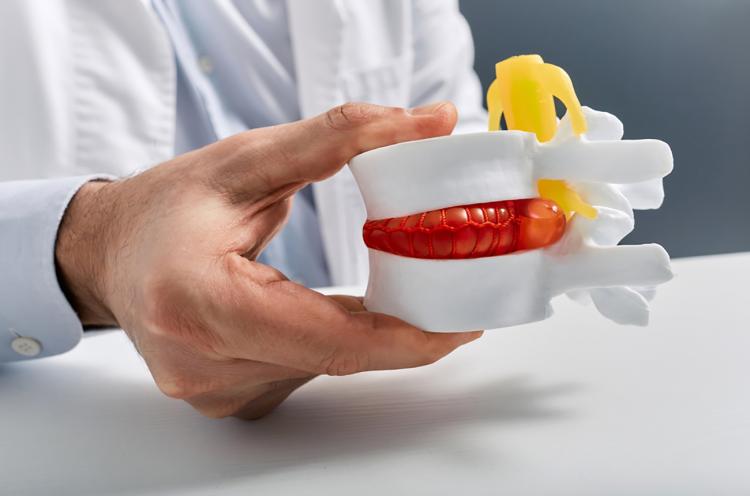
This article offers a detailed exploration of herniated discs, drawing from extensive clinical expertise and evidence-based practices in pain management.
Introduction
Navigating the complexities of spinal health demands a thorough understanding of conditions like herniated discs, which are among the most common and challenging causes of back pain. This article offers a detailed exploration of herniated discs, drawing from extensive clinical expertise and evidence-based practices in pain management. By understanding the stages and timeline of healing, patients and healthcare providers can better approach recovery and improve outcomes.
Overview of Herniated Discs
The spine, a marvel of structural engineering, comprises vertebrae cushioned by intervertebral discs that absorb shock and allow flexibility. A herniated disc, also known as a bulging or slipped disc, occurs when the soft, gel-like nucleus of a spinal disc pushes through a tear in the tough, fibrous outer layer called the annulus. This displacement can compress or irritate nearby spinal nerves, leading to symptoms such as localized pain, radiating pain (often into the arms or legs), numbness, muscle weakness, and tingling sensations. The severity of symptoms depends on the location and extent of the herniation.
Key Risk Factors:
- Age-related degeneration: Over time, discs lose hydration and elasticity, making them more prone to injury.
- Physical activity and trauma: Sudden movements, heavy lifting, or repetitive strain can increase the risk of disc herniation.
- Lifestyle factors: Poor posture, obesity, and a sedentary lifestyle contribute to spinal stress.

Understanding Herniated Discs
1. Causes and Symptoms
Herniated discs can result from various factors, including aging, injury, repetitive strain, and improper lifting techniques. As we age, the spinal discs naturally degenerate, losing water content and elasticity. This degeneration makes them more susceptible to herniation, particularly in individuals over the age of 40. Research published in the Journal of Orthopedic Surgery and Research highlights that age-related disc degeneration is the most common precursor to herniation.
Traumatic injuries, such as falls or automobile accidents, can also cause the discs to rupture or bulge. Additionally, repetitive movements that place excessive strain on the spine—such as frequent bending, twisting, or lifting heavy objects—are significant risk factors. Improper lifting techniques, especially those that place undue stress on the lower back, further exacerbate this risk.
The symptoms of a herniated disc vary depending on its location and severity. Common signs include:
- Back or neck pain: Localized discomfort that may worsen with movement or prolonged sitting.
- Radiating pain: Sharp or burning pain that extends into the arms or legs, often following the path of the affected nerve.
- Numbness or tingling: Sensations that typically occur in areas served by the compressed nerve.
- Muscle weakness: Difficulty performing specific movements due to nerve impairment.
In severe cases, a herniated disc can lead to a condition known as Cauda Equina Syndrome, a medical emergency requiring immediate intervention. This underscores the importance of early diagnosis and treatment.
2. Diagnosis and Treatment Options
- Diagnosing a herniated disc typically involves a comprehensive evaluation by a physician. This evaluation includes:
- Physical Examination: A detailed assessment of pain levels, range of motion, and neurological function, such as reflexes and muscle strength.
- Medical History: Identifying potential risk factors, such as occupational hazards or previous spinal injuries, to contextualize the symptoms.
3. Imaging Tests:
- X-rays: Useful for ruling out other causes of back pain, such as fractures or structural abnormalities.
- Magnetic Resonance Imaging (MRI): The gold standard for visualizing soft tissues, including the disc and nerve roots. Studies in Spine Journal confirm that MRI provides the most detailed assessment of herniations, particularly at the L5-S1 level.
- Computed Tomography (CT) Scans: Often used when MRI is not an option, providing cross-sectional views of the spine to identify herniation and related complications.
These diagnostic tools offer precise insights into the location, size, and impact of the herniation, enabling tailored treatment plans.
Language version
This article is also available in another language.